Four geofencing plays that have nothing to do with retargeting
Most advertising guesses at what you want based on what you typed. Geofencing doesn't guess. It knows where your sneakers are planted.
wpx_srbsoc28 · 5 min read · Updated October 2026
Most advertising guesses at what you want based on what you typed. Geofencing doesn’t guess. It knows where your sneakers are planted.
That’s a different thing, and I don’t think most people appreciate how different. Search and display are built on what somebody typed into a box, or what a pixel followed them around long enough to figure out. Geofencing skips all of that. Somebody is standing in a fly fishing shop on a Tuesday afternoon. Nobody had to infer that. They’re there.
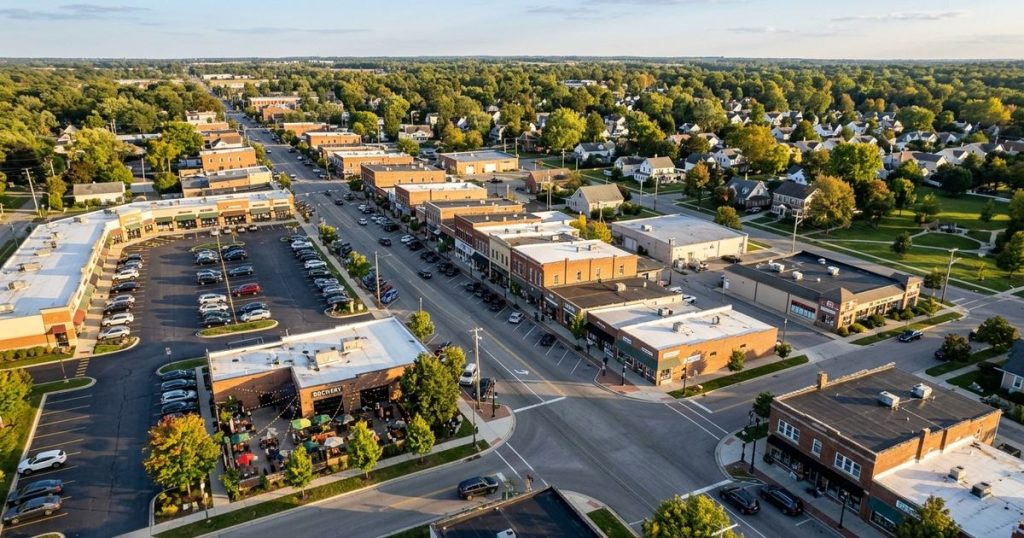
You draw a boundary — a city, a neighborhood, one restaurant, even a specific section inside a big box store — and you gather who crossed it. Then you run display advertising to those people. That’s the whole mechanism.
Here are four ways we actually use it.
One: stand at your competitor’s front door
A new brewery is opening. Who do you want to know about it? People who already go to breweries.
So you fence the other breweries. Not to be sneaky about it — those folks have already told you everything you need to know about their taste by being there on a Saturday afternoon. You’re just introducing yourself.
Same thing for a new restaurant. Fence the places where people already go out to eat. They’ve established the habit. You’re offering them somewhere new to put it.
We do this for townhome builders too, and it works great. Fence the other townhome projects within a reasonable drive. If somebody is walking through one townhome development, they are shopping for a townhome. They probably want to know what else is out there. So you show up in their evaluation, alongside everything else they’re gathering.
Two: follow the storm
This is the one people remember.
A storm line moves through three counties overnight. By morning, every household inside the path it actually took is reachable. The tree service can be in front of the people staring at a split maple in the front yard. The roofer can be in front of the people who just found shingles in the driveway.
It runs the other direction too. Snow in the forecast, and the fellow selling snow blowers gets to be in front of the right neighborhoods before anybody drives to the hardware store.
Weather isn’t the only trigger you can layer on, but it’s the most common one and it’s the easiest to explain. The boundary tells you where. The event tells you when. Together they tell you something close to why.
Three: fence every specialty shop in the country
Here’s my favorite, and it’s a real one.
A good friend and business partner of mine owns a fly fishing lodge in Alaska. It’s one of the best in the state, and that isn’t me being generous — it’s a serious place.
We went and found the most popular fly fishing shops in the United States. There are a couple hundred of them. We fenced every single one.
Think about who that reaches. Somebody standing inside a fly fishing shop is either in the sport, or they’re buying a gift for somebody who is. We don’t have to wonder. And what we put in front of them isn’t a rate sheet — it’s the trip of a lifetime. Water, a fish, a place they can picture themselves standing.
The lodge is booked three years out.
The only other advertising we run for him is YouTube, and that’s brand work. We’re not chasing reservations there and we never have. It’s just what happens up there, on video, so people can see themselves in it. That’s the whole strategy. People want to be there. It’s as simple as that.
Four: the adjacent life
This one’s a little more abstract, and it took me a while to trust it. It works.
Go back to the townhome builder. Instead of only fencing competing developments, we fence the restaurants, the breweries, and the entertainment venues near the project. Because who wants to live there? People who already spend their evenings there.
Same logic for a home designer. Fence the design stores. Or fence a neighborhood that’s getting a little long in the tooth, where a lot of folks are probably starting to think about a remodel whether they’ve said it out loud yet or not.
A chamber of commerce can fence the shopping districts in the towns next door.
The rule is simple. If you can draw a boundary around it, and there’s a reason somebody standing inside that boundary would care about you, geofencing can reach them when they trip it.
Where these ads actually land
One thing that gets missed: this isn’t only phones.
The inventory behind geofencing is enormous. Weather apps and platforms like them, where people check in constantly and the ad space runs deep. Connected and on-demand television. Digital radio. A tremendous amount of real estate to place a message once you’ve defined who should see it.
And the cost per impression is low enough that this stays affordable for a small business. That matters, because that’s my whole world.
My favorite part, and I’ll admit this is a small thing: business owners get a kick out of it. They walk through their own fence, their own ad shows up on their own phone, and they light up.
One more thing
Everything above is geofencing on its own.
Layer retargeting on top of it — the people you fenced, met again later, in a different context — and oh my goodness. That’s a different level entirely.
That’s a whole other subject, and worth a conversation of its own.
If you’re a Chicagoland business and you want to know what any of this would look like for you, we can talk it through in fifteen minutes.

wpx_srbsoc28
Owner of Strategic Online Corp. Warrenville, Illinois — Chicagoland service area.